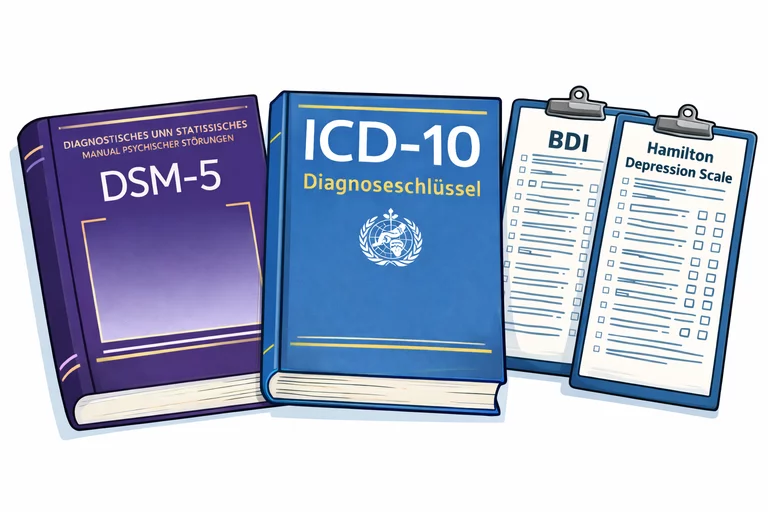
Experience versus Classification
Two ways of understanding psychological suffering
For many patients, the starting point is not the diagnosis, but the experience itself: approaches like the Rorschach test use images and associations to open up access to a person's inner world. This can help make feelings visible that are difficult to put into words — and that matters, even if it speaks to the experiential side of things.
Modern diagnostics, by contrast, works with clear criteria, as outlined in guidelines such as those of the classifications like the ICD-10. These diagnoses help to name and structure symptoms, and to make them treatable.
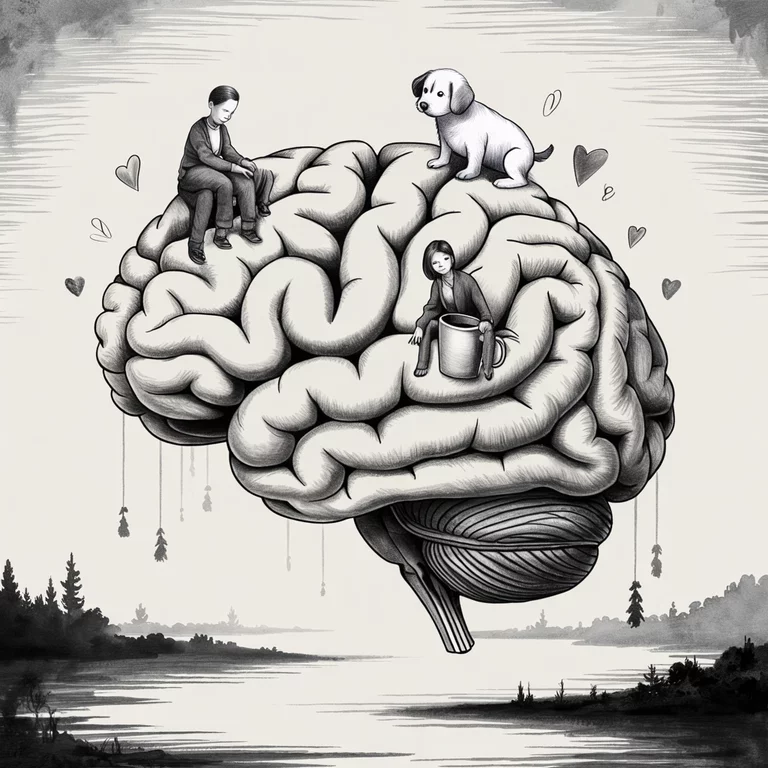
Depression – Between Feeling and Diagnosis
Hermann Hesse's poem 'In the Mist' captures the inner experience of depression — the feeling of loneliness and being cut off from the world
The ICD-10 diagnosis identifies criteria such as depressed mood, loss of interest, and lack of drive lasting at least two weeks
Both are important.

„In the Mist“ (Hermann Hesse)
Strange, to wander in the mist!
Every bush and stone stands alone,
No tree sees another,
Each one is on its own.
The world was full of friends for me
When my life was still bright;
Now that the mist has fallen,
Not one is visible anymore.
Truly, no one is wise
Who does not know the darkness
That inescapably and silently
Separates him from all others.
Strange, to wander in the mist!
Life is loneliness.
No person knows another,
Each one is alone.
Depressive Episode according to ICD-10 (F32)
A depressive episode is diagnosed when symptoms have been present for at least two weeks (exception: a very severe presentation with rapid onset is possible) and lead to significant impairment in daily life.
Core symptoms
At least two of the following three symptoms must be present:
- Persistently low, depressive mood (present for most of the day, nearly every day)
- Marked loss of interest or pleasure in activities that are normally enjoyable
- Reduced drive or increased fatigability
Accessory symptoms
- Reduced concentration and attention
- Diminished self-esteem and self-confidence
- Feelings of guilt and worthlessness
- Negative and pessimistic outlook on the future
- Suicidal thoughts, acts, or self-harm
- Sleep disturbances
- Decreased or increased appetite
- Psychomotor agitation or slowing